Buy coastalescapes.eu ?
We are moving the project
coastalescapes.eu .
Are you interested in purchasing the domain
coastalescapes.eu ?
domain@kv-gmbh.de · 0541-91531010
Buy coastalescapes.eu ?
How do I achieve the isentropic efficiency?
To achieve isentropic efficiency, one must minimize the losses in a system by reducing friction, turbulence, and heat transfer. This can be done by using well-designed components, smooth surfaces, and proper insulation. Additionally, operating the system at optimal conditions and maintaining it regularly can help improve isentropic efficiency. Lastly, selecting the right materials and lubricants can also contribute to achieving higher efficiency levels. **
What is the efficiency of a polytropic-isentropic process?
The efficiency of a polytropic-isentropic process is determined by comparing the work output of the process to the maximum possible work output if the process were completely isentropic. The efficiency is calculated as the ratio of the actual work output to the maximum possible work output. A higher efficiency indicates that the process is closer to being isentropic, meaning it is more efficient at converting energy. **


Similar search terms for Isentropic
Top-Angebote
Products related to Isentropic:
-
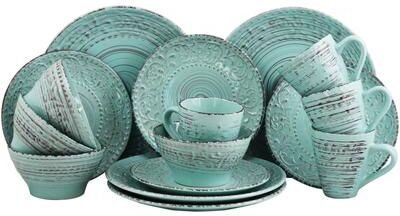
Elama Ocean Waves Turquoise 16-piece Dinnerware SetBring beachy texture to your table with the Ocean Waves dinnerware set from Elama. The turquoise stoneware set features hand-painted detailing and a sand-embossed scroll pattern. Serve up to four with the included plates, bowls, and mugs.82,39 $*Shipping: 0,00 $Secure redirect to the provider
-
Inspired Finds Tropical Ocean Shell Canvas Wall Art Summer Beach Aesthetic Print 15.75x19.69in No Frame seashell SandTurn any room into a calming escape that feels like a quiet moment by the shore. This beach wall art canvas brings the soothing tones of ocean blues and sandy textures into your space, instantly creating a relaxed, vacationinspired atmosphere....48,99 $*Shipping: 0,00 $Secure redirect to the provider
-
Perfect Picks Market Dinosaur Beach Toy Set For Kids Sensory Sand And Water Play Kit orange oceanLet your childs imagination run wild with this delightful beach toy set for kids designed for endless outdoor fun. Featuring colorful dinosaurthemed pieces, this playful kit transforms ordinary sand play into an exciting prehistoric adventure....34,97 $*Shipping: 0,00 $Secure redirect to the provider



-
How to calculate the temperature T2? Why can't the isentropic equation be used for reversible adiabatic state changes?
To calculate the temperature T2 in a reversible adiabatic process, you can use the equation for adiabatic processes: T2 = T1 * (P2/P1)^((γ-1)/γ), where T1 and P1 are the initial temperature and pressure, P2 is the final pressure, and γ is the specific heat ratio. The isentropic equation cannot be used for reversible adiabatic state changes because isentropic processes assume no heat transfer, while adiabatic processes specifically refer to no heat transfer in or out of the system. Therefore, the isentropic equation does not account for the change in temperature due to the absence of heat transfer in an adiabatic process. **
-
How long do beach waves last?
Beach waves can last anywhere from a few hours to a couple of days, depending on your hair type and the products you use. For some people with naturally wavy or curly hair, beach waves may hold for a longer period of time. Using a good quality sea salt spray or texturizing spray can help to enhance the longevity of beach waves. Additionally, using a curling iron or wand to touch up any loose waves can help to extend the style. **
-
How do you calculate the temperature T2? Why can't the isentropic equation be used for reversible adiabatic state changes?
To calculate the temperature T2 for a reversible adiabatic state change, you can use the equation T2 = T1 * (P2/P1)^((γ-1)/γ), where T1 is the initial temperature, P1 is the initial pressure, P2 is the final pressure, and γ is the specific heat ratio. This equation takes into account the change in pressure and the specific heat ratio to determine the final temperature. The isentropic equation cannot be used for reversible adiabatic state changes because it assumes that the process is both adiabatic and reversible, which is not always the case in real-world scenarios. In reality, there are often losses and inefficiencies in the system that make the process non-reversible, and these losses can affect the temperature change. Therefore, the isentropic equation is not accurate for reversible adiabatic state changes. **
-
Why am I not getting beach waves?
There could be several reasons why you are not achieving beach waves. It could be due to using the wrong styling products or tools, not using enough heat or the right technique when curling your hair, or not allowing your hair to cool and set properly after styling. Additionally, the natural texture and thickness of your hair can also affect how well it holds a curl. Experimenting with different techniques and products, as well as seeking advice from a professional stylist, may help you achieve the beach waves you desire. **


When did researchers succeed in discovering internal ocean waves?
Researchers succeeded in discovering internal ocean waves in the 1970s. Using satellite imagery and oceanographic instruments, scientists were able to observe and measure these waves, which are caused by the interaction of tides and underwater topography. This discovery has since led to a better understanding of ocean dynamics and their impact on marine ecosystems. **
When did researchers manage to discover internal ocean waves?
Researchers managed to discover internal ocean waves in the mid-19th century. The first observations of internal waves were made by the British Royal Navy in the Strait of Gibraltar in the 1840s. Since then, advancements in technology and oceanographic research have allowed scientists to better understand the formation and behavior of these waves within the ocean. **
Top-Angebote
Products related to Isentropic:
-
Elama Ocean Waves Turquoise 16-piece Dinnerware SetBring beachy texture to your table with the Ocean Waves dinnerware set from Elama. The turquoise stoneware set features hand-painted detailing and a sand-embossed scroll pattern. Serve up to four with the included plates, bowls, and mugs.82,39 $*Shipping: 0,00 $Secure redirect to the provider
-
Inspired Finds Tropical Ocean Shell Canvas Wall Art Summer Beach Aesthetic Print 15.75x19.69in No Frame seashell SandTurn any room into a calming escape that feels like a quiet moment by the shore. This beach wall art canvas brings the soothing tones of ocean blues and sandy textures into your space, instantly creating a relaxed, vacationinspired atmosphere....48,99 $*Shipping: 0,00 $Secure redirect to the provider
-
How do I achieve the isentropic efficiency?
To achieve isentropic efficiency, one must minimize the losses in a system by reducing friction, turbulence, and heat transfer. This can be done by using well-designed components, smooth surfaces, and proper insulation. Additionally, operating the system at optimal conditions and maintaining it regularly can help improve isentropic efficiency. Lastly, selecting the right materials and lubricants can also contribute to achieving higher efficiency levels. **
-
What is the efficiency of a polytropic-isentropic process?
The efficiency of a polytropic-isentropic process is determined by comparing the work output of the process to the maximum possible work output if the process were completely isentropic. The efficiency is calculated as the ratio of the actual work output to the maximum possible work output. A higher efficiency indicates that the process is closer to being isentropic, meaning it is more efficient at converting energy. **
-
How to calculate the temperature T2? Why can't the isentropic equation be used for reversible adiabatic state changes?
To calculate the temperature T2 in a reversible adiabatic process, you can use the equation for adiabatic processes: T2 = T1 * (P2/P1)^((γ-1)/γ), where T1 and P1 are the initial temperature and pressure, P2 is the final pressure, and γ is the specific heat ratio. The isentropic equation cannot be used for reversible adiabatic state changes because isentropic processes assume no heat transfer, while adiabatic processes specifically refer to no heat transfer in or out of the system. Therefore, the isentropic equation does not account for the change in temperature due to the absence of heat transfer in an adiabatic process. **
-
How long do beach waves last?
Beach waves can last anywhere from a few hours to a couple of days, depending on your hair type and the products you use. For some people with naturally wavy or curly hair, beach waves may hold for a longer period of time. Using a good quality sea salt spray or texturizing spray can help to enhance the longevity of beach waves. Additionally, using a curling iron or wand to touch up any loose waves can help to extend the style. **
Similar search terms for Isentropic
-
Perfect Picks Market Dinosaur Beach Toy Set For Kids Sensory Sand And Water Play Kit orange oceanLet your childs imagination run wild with this delightful beach toy set for kids designed for endless outdoor fun. Featuring colorful dinosaurthemed pieces, this playful kit transforms ordinary sand play into an exciting prehistoric adventure....34,97 $*Shipping: 0,00 $Secure redirect to the provider
-
Inspired Finds Tropical Ocean Shell Canvas Wall Art Summer Beach Aesthetic Print 7.87x9.84in No Frame seashell SandTurn any room into a calming escape that feels like a quiet moment by the shore. This beach wall art canvas brings the soothing tones of ocean blues and sandy textures into your space, instantly creating a relaxed, vacationinspired atmosphere....39,99 $*Shipping: 0,00 $Secure redirect to the provider
-
How do you calculate the temperature T2? Why can't the isentropic equation be used for reversible adiabatic state changes?
To calculate the temperature T2 for a reversible adiabatic state change, you can use the equation T2 = T1 * (P2/P1)^((γ-1)/γ), where T1 is the initial temperature, P1 is the initial pressure, P2 is the final pressure, and γ is the specific heat ratio. This equation takes into account the change in pressure and the specific heat ratio to determine the final temperature. The isentropic equation cannot be used for reversible adiabatic state changes because it assumes that the process is both adiabatic and reversible, which is not always the case in real-world scenarios. In reality, there are often losses and inefficiencies in the system that make the process non-reversible, and these losses can affect the temperature change. Therefore, the isentropic equation is not accurate for reversible adiabatic state changes. **
-
Why am I not getting beach waves?
There could be several reasons why you are not achieving beach waves. It could be due to using the wrong styling products or tools, not using enough heat or the right technique when curling your hair, or not allowing your hair to cool and set properly after styling. Additionally, the natural texture and thickness of your hair can also affect how well it holds a curl. Experimenting with different techniques and products, as well as seeking advice from a professional stylist, may help you achieve the beach waves you desire. **
-
When did researchers succeed in discovering internal ocean waves?
Researchers succeeded in discovering internal ocean waves in the 1970s. Using satellite imagery and oceanographic instruments, scientists were able to observe and measure these waves, which are caused by the interaction of tides and underwater topography. This discovery has since led to a better understanding of ocean dynamics and their impact on marine ecosystems. **
-
When did researchers manage to discover internal ocean waves?
Researchers managed to discover internal ocean waves in the mid-19th century. The first observations of internal waves were made by the British Royal Navy in the Strait of Gibraltar in the 1840s. Since then, advancements in technology and oceanographic research have allowed scientists to better understand the formation and behavior of these waves within the ocean. **
* All prices are inclusive of VAT and, if applicable, plus shipping costs. The offer information is based on the details provided by the respective shop and is updated through automated processes. Real-time updates do not occur, so deviations can occur in individual cases. ** Note: Parts of this content were created by AI.